Resources
The library
Catalogue
Repository
Resources for study and research
The library of the «Eduardo Martínez Torner» Higher Conservatory of Music is a documentation and information center specialized in Music that offers support to the educational community in the study and research processes with a whole series of services such as bibliographic searches, document consultation guide for the drafting of the work, tutorials on the form and structure of bibliographic references, advice on intellectual property, guidance for scientific dissemination and publication or deposit in a specific open access repository (Music-RIA), etc. It also facilitates access to all kinds of useful resources.
Legislation and official publications
This section contains some references that are essential to access the legislation and official publications of Europe, Spain and Asturias. In them we can find everything from all the educational laws in force in Spain in recent centuries to job advertisements, study plans, etc.
In the Official State Gazette (BOE, for its acronym in Spanish), the general provisions of State bodies and international treaties or agreements are published; the general provisions of the autonomous communities, in accordance with the provisions of the Statutes of Autonomy and the regulations with the rank of law issued for their development; the resolutions and acts of the constitutional bodies of the State, in accordance with the provisions of their respective organic laws, the provisions that are not of a general nature, the resolutions and acts of the ministerial departments and other bodies of the State and public Administrations, when A law or a royal decree so establishes it and the calls, summonses, requirements and announcements when a law or a royal decree so establishes it.
Official Gazette of the Principality of Asturias (BOPA)
It is the official periodical of the Autonomous Community of the Principality of Asturias where the general provisions, administrative acts are published, along with texts that, by virtue of legal or regulatory provision, must be published in the aforementioned “Official Diary” for its legal validity or effectiveness.
Iberlex gives free access to national legislation that affects the general scope of the State since 1960 with images of all documents and the text since 1978. Its legislation database incorporates, in addition to the text of the provisions, a detailed legal analysis of each provision. It also includes the verdicts of the Constitutional Court that affect state legislation and the European legislation offers since 1952: regulations, directives, decisions that affect Spain, etc.
Publications Office of the European Union
The Publications Office of the European Union is the official provider of publishing services for all EU institutions, bodies and agencies. As such, it is the central access point to EU law, publications, open data, research results, tender notices and other official information. Its mission is to support EU policies and make a wide variety of information available to the public as accessible and reusable data. The general objective is to facilitate transparency, economic activity and the dissemination of knowledge.
Academic search engines
Academic search engines are the ideal tools for students and researchers who search for scientific bibliography from various disciplines, topics and sources (articles, theses, summaries and bibliographic reviews, research papers, presentation proceedings, university repositories, etc.). These are some of the ones we recommend
Music and musicians
Generals:
Allmusic (formerly known as All Music Guide or AMG) is an English-language Web portal from the company All Media Guide designed as a global guide service for users, fans and the music industry in general on all types of music and all genres. Its structured content and its reviews of countless albums and artists, its books, etc., have made Allmusic very popular in this field and an important reference within the world of music.
Hundreds of thousands of classical music files. The majority of composers and their music are represented in this resource, although with quite a few imbalances between them we can find biographies, scores, etc.
Indiana University Music Resource Directory
List of links to musical resources created by Indiana University. It allows you to find interesting resources not listed elsewhere but is too focused on the American environment.
Nathan Eakin began the Gaylord Music Library Necrology archive as an archive in the mid-1980s. In 1991, the project transitioned to an archive created using word processing and since 1995 it has been available on this website. The purpose is to inform about what is happening in the current world of music as it arrives at the Gaylor Music Library.
MusicalOnline is a directory of services for musicians, artists, managers, students and educators, allowing them to access a large amount of information for free.
American Institute of Musicology
The American Institute of Musicology focuses its interest on Medieval, Renaissance and baroque music. Since its founding, the Institute has published more than 650 academic volumes. The Institute’s publications are used by scholars and artists alike and constitute an important collection of early music and theoretical writings on music from complete works of the great composers who lived until the 17th century.
Composer´s bios and their works
A page with biographies of composers, located on the NAXOS company website. In most cases it only presents very schematic data from the biographies but it constitutes a good opportunity to make a first approach.
Classical Net was the first place for Web resources about music. This index lists composers for whom there is a dedicated page, which may include a biography, recommended works, recommended recordings, and other comments and articles. It is not intended to be an exhaustive index.
This is a website with the lyrics and librettos of operas, but also with other works of music in which the voice intervenes with the texts in the original language and in its translation into Spanish. This is a collaborative initiative.
Documentation Center for the Performing Arts and Music
The Documentation Center for the Performing Arts and Music (CDAEM, for its acronym in Spanish) arises from the merger of the Music and Dance Documentation Center and the Theater Documentation Center. Its main purpose is to collect, preserve and disseminate artistic, graphic, statistical materials, etc. generated by performing and musical activity in Spain. It makes a wide variety of documentary collections available to citizens (photographs, press clippings, books, audio and video recordings, posters, programs, artists’ personal collections…).
Specific authors
The Digital Mozart Edition (DME) is the continuation and expansion of the NMA in the modern digital age.It is being developed thanks to the cooperation of the Mozart Institute, the Mozarteum Foundation in Salzburg, Austria, with the Packard Humanities Institute in Los Altos, California, USA.The DME is not limited to the presentation of musical works in digital format, but has also dedicated itself to the online presentation of letters and documents, as well as text sources linked to Mozart’s works.
The Bonn University and State Libraryhas an extensive collection of musical autographs and letters by Clara and Robert Schumann, the core of which dates back to 1974.
This resource is run by the University of Chicago and houses a digitized sheet music collection containing more than 400 printed scores by Frédéric Chopin. They are mostly first editions. It is possible to access the collection through a general search or through thematic searches (titles, uniform titles, matters, dedications).
The Jean-Baptiste Lully Collection
Jean-Baptiste Lully’s digitized sheet music collection housed at the University of North Texas. It contains 30 scores of operas and ballets. Many of these are first editions published by Christophe Ballard – with the printing privilege of King Louis XIV.
The Bach Digital database portal aims to provide Bach researchers, practicing musicians and music enthusiasts around the world with scientifically sound information on the works of Johann Sebastian Bach, his sons Carl Philipp Emanuel, Wilhelm Friedemann, Johann Christoph Friedrich and Johann Christian and other composers of the Bach family, as well as about the tradition of these works. Digital Bach is a joint project of the Staatsbibliothek zu Berlin – Preußischer Kulturbesitz, the Sächsische Landes- und Universitätsbibliothek Dresden and the Bach-Archiv Leipzig. It is mainly financed by the DFG. In terms of content, the database was created on the basis of the so-called Göttingen Bach Catalog.
Mr. Pierre Gouin carried out a modern edition of the four harpsichord books of Jacques Du Phly. This edition is free online at this site. A second version of this edition was put online on January 24, 2011.
Brahms-Institut an der Musikhochschule Lübeck
The Brahms-Institut is dedicated to the life, work and impact of Johannes Brahms with a unique collection of valuable musical manuscripts, letters, photos and other sources about Johannes Brahms and his environment. These materials are available digitally to all interested parties. As a “cultural beacon” with an international reputation, the institute is also committed to communicating Brahms and his music.
Ignaz Pleyel Early Editions Digital Collection***
This collection of over 200 printed and handwritten early scores represents the work of the French composer and music editor, Ignaz Pleyel (1757-1831). He deals primarily with keyboard and chamber music, including arrangements of large orchestral works, published during the composer’s lifetime. This collection was assembled by Dr. Rita Benton, former Head of the Music Library at the University of Iowa.
Libraries, archives and documentation centers
Library of the University of Oviedo
The Library of the University of Oviedo (BUO, for its acronym in Spanish) is a service that brings together all the bibliographic, documentary and audiovisual collections of the University of Oviedo and whose specialized staff is responsible for facilitating access to the scientific information necessary for the development of research, for contributing to the carrying out of teaching activity and for promoting the practice of study in the university community. The BUO is made up of the central services of the Library, the campus, area or center libraries, the libraries of the university institutes and the Historical Archive of the University.
Library of Asturias «Ramón Pérez de Ayala»
The Library of Asturias coordinates the Collective Catalog of Bibliographic Heritage (CCPB, for its acronym in Spanish) in the territory of the Principality of Asturias. Its function is to collect, preserve and disseminate the Asturian bibliographic collection: to exercise regional bibliographic control and to establish and maintain cooperation with the library services of the different areas.
The main objective is to offer citizens the remote consultation service of the catalogs of the 52 State Public Libraries (BPE, for its acronym in Spanish), thus facilitating knowledge and access to the information and cultural resources of said Libraries, since they constitute the most important library network of those that exist in Spain, due to its presence and extension throughout the national territory. It allows access to the collections of 52 State Public Libraries (BPE) and 15 public library networks of Autonomous Communities (Andalusia, Aragon, Cantabria, Castilla-La Mancha, Castilla y León, Community of Madrid, Valencian Community, Extremadura, Galicia, La Rioja, Navarra, Basque Country (2), Principality of Asturias and Region of Murcia). The service was launched in May 1996 at the initiative of the General Directorate of Books, Archives and Libraries, through the General Subdirectorate of Library Coordination.
Network of Spanish University Libraries (REBIUN, for its acronym in Spanish)
It is made up of the Directors of the University Libraries. Its basic objective is to be a stable organization in which all Spanish university libraries are represented, in order to raise the level of library services and infrastructure through cooperation.
Catalogs of monographs, magazines and maps from the library network of the Higher Council for Scientific Research (CSIC, for its acronym in Spanish). It is composed of a hundred specialized libraries.
Consorci de Biblioteques Universitaries de Catalunya***
The mission of the Consortium of University Libraries of Catalonia (CBUC, for its acronym in Spanish) is to improve library services through cooperation. The CBUC is made up of the following institutions: Universities of Barcelona, Lleida, Gerona; Autonomous of Barcelona; Rovira i Virgili; Polytechnic of Catalonia; Oberta de Catalunya; Pompeu Fabra and Library of Catalonia. It offers, among other services: Collective catalog of consortium libraries, interlibrary loans, summary service, etc.
The National Library is the State’s higher library institution and head of the Spanish Library System. As a national library, it is the center responsible for the identification, preservation, conservation and dissemination of Spanish documentary heritage and aims to be a fundamental reference center for research into Hispanic culture.
It is one of the largest libraries in the world with more than 138 million documents and the largest collection of rare and valuable books, including one of only four copies in a perfectly-preserved condition of the Gutenberg Bible, and the draft of the Declaration of Independence.In addition, it hosts more than 1 million publications of the United States government, 1 million issues of newspapers from different parts of the world, from the last three centuries, 500,000 rolls of microfilm, 6,000 comic titles, the largest collection of legal documents, films, nearly 5 million maps, scores, 2.7 million sound recordings, and more than 13.7 million engravings and photographic copies.
The British Library is the National Library of the United Kingdom, one of the largest in the world. It contains books, maps, newspapers, sheet music, patents, manuscripts, stamps, among other objects. These are in 625 km of shelves that grow 12 kilometers per year. The reading space has capacity for 1,200 readers. The British Library makes information available to students and researchers in the UK and around the world.
The German National Library is the most important library in the Federal Republic of Germany. It was established in 1990, when three institutions came together in a single body: the German Library of Leipzig; the German Library in Frankfurt am Main and the Music Archive in Berlin. The collection of the German National Library comprises 23.5 million works (13.9 million in Leipzig, 8.2 million in Frankfurt and 1.4 million in Berlin).
Library and Archives Canada***
The Library and Archives Canada/LAC collects and preserves Canada’s documentary heritage, making it accessible to all Canadians either online or in archives at its headquarters. This heritage includes publications, archival records, sound and audiovisual materials, photographs, illustrations, and electronic documents such as websites. As part of this mandate, LAC works closely with other newspaper archives and libraries to acquire and share these materials as widely as possible.
Bibliothèque Nationale de France
The National Library of France, also known as the National Library of Paris; and whose acronym is BnF, is one of the most important libraries in France and the World. It has the status of a public establishment. As a national library, its mission is to establish collections, particularly within the framework of legal deposit, to ensure their conservation and to communicate them to the public. It produces a reference catalogue, cooperates with other establishments at the national and international level and participates in search programs. It houses more than 13 million books and 350,000 bound volumes of manuscripts, as well as collections of maps, coins, documents, prints and sound records.
Gallica is the result of the collaboration between the National Library of France, the National Syndicate of Publishing and the Directorate of Books and Reading, the National Book Center, associated publishers and distributors of electronic books. It has been conceived as a heritage and encyclopedic library with very diverse topics: history, literature, science, philosophy, law, economics and political science, with special emphasis on French-speaking culture. The library provides access to books, images and sound resources, and is considered the largest virtual library in the world.
Project Gutenberg (PG) was developed by Michael Hart in 1971 in order to create a library of free e-books that already exist physically. These e-books have since been available on the Internet. The texts provided are mainly in the public domain, either because they never had copyright or because if they did, they have already expired. There are also some copyrighted texts that Project Gutenberg has made available with the permission of its writers.
Free Internet portal that offers a selection of documents from the world’s largest libraries in seven languages. It was developed by a team from the US Library of Congress and technical input from the libraries of Alexandria and Egypt. National libraries and cultural institutions from countries such as Saudi Arabia, Brazil, China, Egypt, France, Japan, Great Britain, Russia and the United States are found amongst the first contributors.
European digital library that is also a museum and an archive which contains 3 and a half million materials, including digitized books, films, paintings, press, sounds and archives from various European collections.
The catalog includes documents in physical format: books, magazines, videos, CD-ROM, CD-I, etc., and documents in electronic and digital format. The digital collection contains, among many other information resources, specialized and full-text databases, electronic journals on a wide variety of topics, etc.
Miguel de Cervantes Virtual Library
The Miguel de Cervantes Virtual Library (BVMC, for its acronym in Spanish), inaugurated in July 1999, is an extensive digital edition project of the Spanish and Latin American bibliographic, documentary and critical heritage, which aims to promote the universal expansion of Hispanic cultures through the use and application of the most advanced technological means.
The Hispanic Digital Library is the digital library of the National Library of Spain. It provides free access to thousands of digitized documents, including books printed between the 15thand 20thcenturies, manuscripts, drawings, engravings, pamphlets, posters, photographs, maps, atlases, sheet music, historical press and sound recordings.
UR Research (University of Rochester)
The University of Rochester is a private university located in Rochester, northern New York. The university is a member of the prestigious Association of American Universities and within it is the Eastman School of Music, one of the most prestigious music institutions in the world. It is located in downtown Rochester, New York. It has achieved international prominence for its highest levels.
WLSCM (Web Library of Seventeenth-Century Music)
It is a service offered by the Society for Seventeenth-Century Music, which makes a growing catalog of music in modern editions available to scholars, performers and students.
It is a private American university, located in Durham, North Carolina. In its 2019 edition, the Times Higher Education ranked Duke number seven among the best American universities. The university is a member of the Association of American Universities, an association that brings together elite research universities in the United States of Americasince 1900.
Catalog of digitized documents from the Royal Library of Copenhagen
Database of the Royal Danish Library where there is an important collection of digitized music, most of it in its original versions.
International Music Score Library Proyect
The IMSLP project aims to create a virtual library containing musical scores under the public domain, as well as scores from composers who are willing to share their music with the world for free, hosting a large collection of digitized scores in PDF format.
The Choral Public Domain Library (CPDL) is a sheet music archive focused on choral and vocal music that is in the public domain. Its wiki format makes it easier for users to obtain more features beyond mere archiving and make the scores accessible for download from the CPDL, such as original texts, their sources and translations, cross-indexes of choral music according to musical genre criteria, information on the composer, etc.
Lexcerpts.***
This is a project that presents the main orchestral excerpts of solo instruments to facilitate the study of instrumental performance.
Dialnet is one of the largest bibliographic portals in the world, whose main purpose is to give greater visibility to Hispanic scientific literature. Dialnet has its origins in the Library and Computer Service of the University of La Rioja, which was later joined by the Universities of Cantabria and the Public University of Navarra. Shortly after, those of Castilla-La Mancha, Zaragoza, Extremadura, Oviedo and the Basque Country would join. Since then, other University Libraries have been joining, both nationally and internationally, as well as Public Libraries and specialized Libraries.
The Spanish Archives Portal (PARES, for its acronym in Spanish) is the main platform for the dissemination of Spanish Historical Documentary Heritage, created and managed by the General Subdirectorate of State Archives, of the Ministry of Culture and Sports. PARES does not require registration as a user. Consultation is free of charge for all citizens, both of the descriptive information of the documents and of the images associated with them.
Academic research in Spain
Musical research is a process in which Music is treated as a joint work of performer, composer and listener, seeing the whole and at the same time the individual parts. In this way, the musical past is recovered and related to other subjects, focusing on different areas of work that vary according to the tradition of each nation. Most of the academic musical research in our country can be located in the following links.
Teseo is a database with information on Doctoral Theses since 1976. This page is created to allow future doctors to enter their thesis data into the system. The system will control the different steps that the thesis goes through, and once approved it will be stored in the TESEO Consultation System so that it can be consulted from the Internet.
Network Doctoral Theses (TDR, for its acronym in Spanish) is a cooperative repository that contains, in digital format, doctoral theses read at the universities of Catalonia and other autonomous communities. It allows remote consultation via the Internet of the full text of the theses, as well as searching by author, director, title, topic of the thesis, university and department where it was read, year of defense, etc. The objectives of this repository, managed by the Consorci de Biblioteques Universitàries de Catalunya (CBUC) and the Center de Supercomputació de Catalunya (CESCA), and sponsored by the Generalitat of Catalonia. *** Redacción
Repositories of specific universities. In these repositories there are academic articles, books, presentations, speeches, conferences, academic works (TFG, TFM and doctoral theses) from the universities that we have selected for their interest in the study of music.
Music and musicology journals
This is a series of journals that provide free and immediate access to their content, at no cost to the user or their institution, based on the principle that making research available to the public for free favors the global exchange of knowledge. Some of them require prior registration.
AV Notes. Music Research Journal, from the Higher Conservatory of Music of Jaen
Ibero-American Music Notebooks
Nassarre, Aragonese journal of musicology
Complutense Electronic Journal of Research in Musical Education (RECIEM, from its acronym in Spanish)
Folklore Journal, from the Joaquín Díaz Foundation
Voices: A world forum for music therapy
Online Journal of Music Sciences (OJOMUS)
Transposition Musique et sciences sociales
Electronic Journal of Music in Education
Analytical Approach to World Music
Journal of Creative Music Systems
Approaches: Music Therapy and Special Music Education
Photo Journal of Musical Education, Arts and Pedagogy
Transactions of the International Society for Music Information Retrieval
Musical institutions and associations
AEDOM (Spanish Association of Musical Documentation):
Organization that brings together professionals from libraries, archives and documentation centers interested in musical documentation. Its objectives are to promote activities of centers and institutions dedicated to music, strengthen collaboration between them, and collaborate in the professional training of musical documentation workers. It is the Spanish branch of the International Association of Music Libraries (IAMSL) and is part of the Spanish Federation of Archival, Library, Documentation and Museum Societies (FESABID, from its acronym in Spanish).
SEdeM (Spanish Society of Musicology):
The Spanish Society of Musicology (SEdeM, from its acronym in Spanish) is a scientific, cultural and teaching association whose objective is the study and teaching of musicology and music in general, with emphasis on the knowledge, recovery and dissemination of Spanish musical heritage and any of its historical and geographical branches, as well as the promotion of musicological research. To this end, it organizes various scientific activities (such as conferences and symposiums), helps in the publication of specialized works and edits the Journal of Musicology (RdM, from its acronym in Spanish), which includes scientific articles, bibliographic and record reviews, news and summaries of doctoral theses.
SIBE (Society of Ethnomusicology):
SIBE-Society of Ethnomusicology is a scientific society that is interested in music understood as a cultural fact and in the relationships of music with its social contexts. Its objective is to investigate and disseminate ethnomusicology, a field that studies musical cultures around the world and includes popular, folkloric and traditional music. The SIBE organizes scientific activities and conferences and the TRANS Journal (Transcultural Music Journal), published annually, is its main publication.
ICCMU, Complutense Institute of Musical Sciences:
Branch of the Ministry of Culture and Sports of the Government of Spain dedicated to the Performing Arts and Music. On its website you can find information about artistic centers, festivals and artistic circuits, awards, aid and subsidies and current notices. It has two documentation centers: the Theater Documentation Center and the Music and Dance Documentation Center, and both are integrated into the Documentation Center for the Performing Arts and Music (CDAEM, from its acronym in Spanish)
CDAEM (Documentation Center for the Performing Arts and Music):
It is the integration of the two documentation centers of the National Institute of Performing Arts and Music (INAEM, from its acronym in Spanish): the Theater Documentation Center and the Music and Dance Documentation Center. It is, therefore, a unit dependent on the Ministry of Culture and Sports of Spain. The CDAEM has an enormous collection of books, digitizations of documents and recordings, with both online and in-person access, available to performing arts and music professionals, researchers, teachers, students and anyone interested in performing arts and music. The purpose of the CDAEM is to provide information on organizations and resources for the promotion, development and dissemination of theatre, dance, music and circus in Spain.
Musicology Area of the Milá y Fontanals Institution, of the CSIC (Higher Center for Scientific Research)
This entity has developed pioneering musicological publications in Spain, such as the Anuario Musical journal, which includes musicological research articles covering topics such as historical musicology, ethnomusicology and other interdisciplinary fields linked to music) or the series Monuments of Spanish Music (which consists in critical editions of works by composers of Hispanic music, unpublished works, complete works of authors, comprehensive editions of relevant sources, among other compositions). He also created the important CSIC-IMF Traditional Music Fund based on the folkloric missions and competitions to collect traditional music from various Spanish regions that he organized.
Musical Documentation Center of Andalusia (Conciergerie of Culture and Historical Heritage):
This center is concerned with gathering, protecting, conserving and disseminating the Andalusian musical heritage. Its Documentation Department is responsible for collecting, selecting and processing useful information from researchers, professionals, students, public entities, etc. Research papers are edited from this department. This center preserves musical instruments and sound recordings and has a collection of traditional oral music.
SGAE*** (General Society of Authors and Editors)
It is an entity dedicated to the defense and management of the intellectual property rights of its partners, among whom are artists and businessmen linked to music. It also has the most important civil music archive in Spain and one of the most complete theater libraries in the country. These documentary collections are accessible through the Documentation and Archive Center (CEDOA, from its acronym in Spanish), which guarantees the conservation and accessibility of this heritage at the headquarters in Madrid and Barcelona.
International Musicology Society (IMS):
It is the community that connects musicologists internationally. Seek the advancement of musicological research. This society organizes academic events, publishes the journal Acta Musicológica and offers its members various benefits linked to research.
American Musicology Society (AMS):
It is an organization created to promote research, teaching and learning of the various branches of music. To this end, it launches grants, scholarships, publications, conferences, meetings, workshops, discussion forums and a wide variety of resources of great interest to musicians, musicologists, music students, researchers, music teachers, music fans, etc.
Society for Ethnomusicology (SEM):
It is a global, interdisciplinary network that brings together people and institutions dedicated to the study of music in all cultural contexts and historical periods. It carries out scientific publications, conferences, workshops, announces awards, and organizes research projects and programs.
Society for Music Theory (SMT):
This organization promotes the development of music theory as a school and pedagogical discipline that encompasses various theoretical and practical approaches. The SMT holds conferences, awards, scholarships and various resources related to music theory. It publishes three journals: Music Theory Spectrum (accessible only to members of the STM), Music Theory Online (https://www.mtosmt.org/%20 free and open access), SMT-V (free audiovisual magazine) and they have recently published The SMT-POD podcast is underway.
International Council for Traditional Music (ICTM):
It is an academic organization that seeks to deepen the study, practice, documentation, preservation and dissemination of traditional music and dance from all countries. It organizes conferences, symposiums, colloquiums and forums. In addition, it publishes the Yearbook for Traditional Musical and the Bulletin of the ICTM.
International Association for the Study of Popular Music (IASPM):
It is an international interprofessional and interdisciplinary society dedicated to the academic study of popular music. Its activities consist of conferences, publications, research projects, among others. The IASPM has a branch in different countries. The Spanish branch is the Urban Popular Music Working Group of the SIBE.
The Spanish ISBN Agency provides information about the ISBN. Additionally, through the SGPLL website, the Agency offers the possibility of making inquiries about Spanish books for sale and publishers from the Agency’s databases and asking questions or queries to Bibliographic Information Services, procedures, databases and other issues of interest.

 Nacido en Mieres (Asturias), inicia sus estudios musicales de piano y percusión en el Conservatorio Profesional de Música de Oviedo, continuando posteriormente su formación en la especialidad de Percusión en el Conservatorio Superior de Música “Eduardo Martínez Torner” de Oviedo. De manera paralela, cursa el Grado de Maestro en Educación Primaria, con especialidad en Música, en la Universidad de Oviedo.


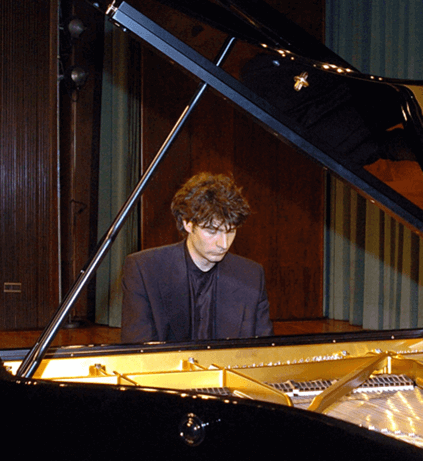 Born in Madrid. In a short time, he moved with his family to Almería and Cádiz, whereby he began his Piano studies at Academia de Bellas Artes Santa Cecilia in El Puerto de Santa María and the Real Conservatorio Profesional de Música Manuel de Falla. Later, he furthered his studies at Conservatorio de Música Amaniel, in his hometown, and the Real Conservatorio Superior de Música de Madrid with Fernando Puchol, where he obtained three Graduation Prizes in Piano, Chamber Music and Musical Analysis, as well as the bachelor’s degree in Piano, Chamber Music and Improvisation.